West Virginia → Grandfather Mountain
From West Virginia to Grandfather Mountain: Discovering the Highland Games
Highland Games are not the most obvious choice for a family with no Scottish ancestry.
Highland Games are not the most obvious choice for a family with no Scottish ancestry.
My family is Czech and Russian. Daniel’s background is English and Welsh. None of us has a clan tent to visit or a family tartan to wear. Still, after spending two weekends around bagpipes, Highland athletics, and people eager to explain the traditions, I began to understand why these events inspire such loyalty.
The West Virginia Wild and Wonderful Celtic Festival and Highland Games and the Grandfather Mountain Highland Games offer two very different introductions to that world. The West Virginia festival is small enough that the announcer might wander over and talk to you while you watch the caber toss. Grandfather Mountain is a major production, with crowds, shuttle buses, and rows of clan tents spread across the mountain.
Both are within reach of Raleigh for a weekend, although they call for different kinds of trips. Beverly is the better choice if you want a relaxed festival folded into a longer West Virginia getaway. Grandfather Mountain offers the spectacle and scale people likely picture when they hear “Highland Games.”
We ended up experiencing both within a few weeks of each other, partly because I thought they would make an interesting blog post and partly because each gave us a reason to spend time with our parents. The festivals were entertaining, but the family weekends around them are what made the trips memorable.
Father’s Day Weekend in West Virginia
The first trip took me back to a familiar part of West Virginia over Father’s Day weekend.
I attended Davis & Elkins College in Elkins, just down the road from the festival grounds in Beverly, so the trip felt like a return to places I already knew. My parents joined me, and we made a full weekend of it rather than driving in only for the games.
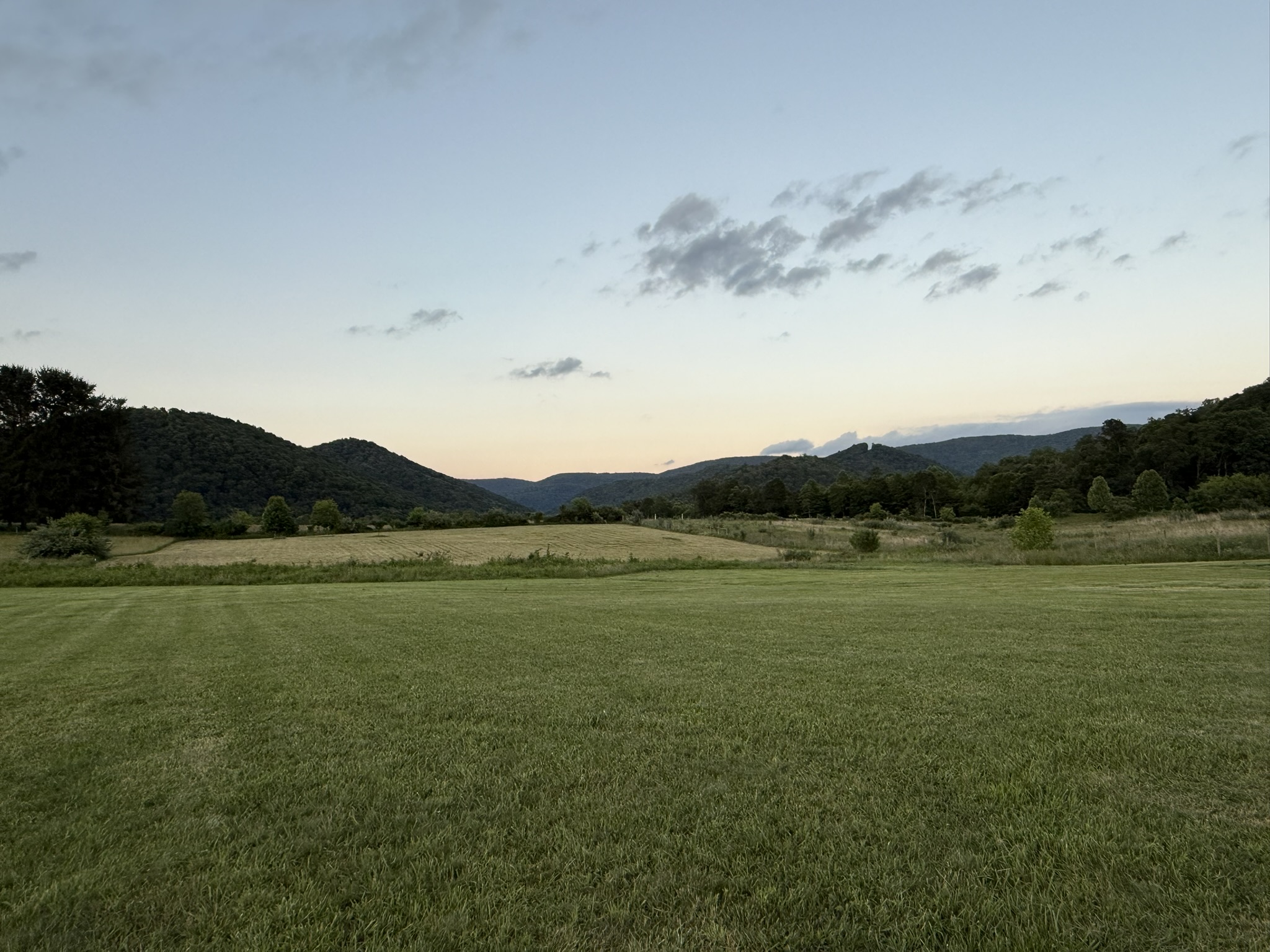
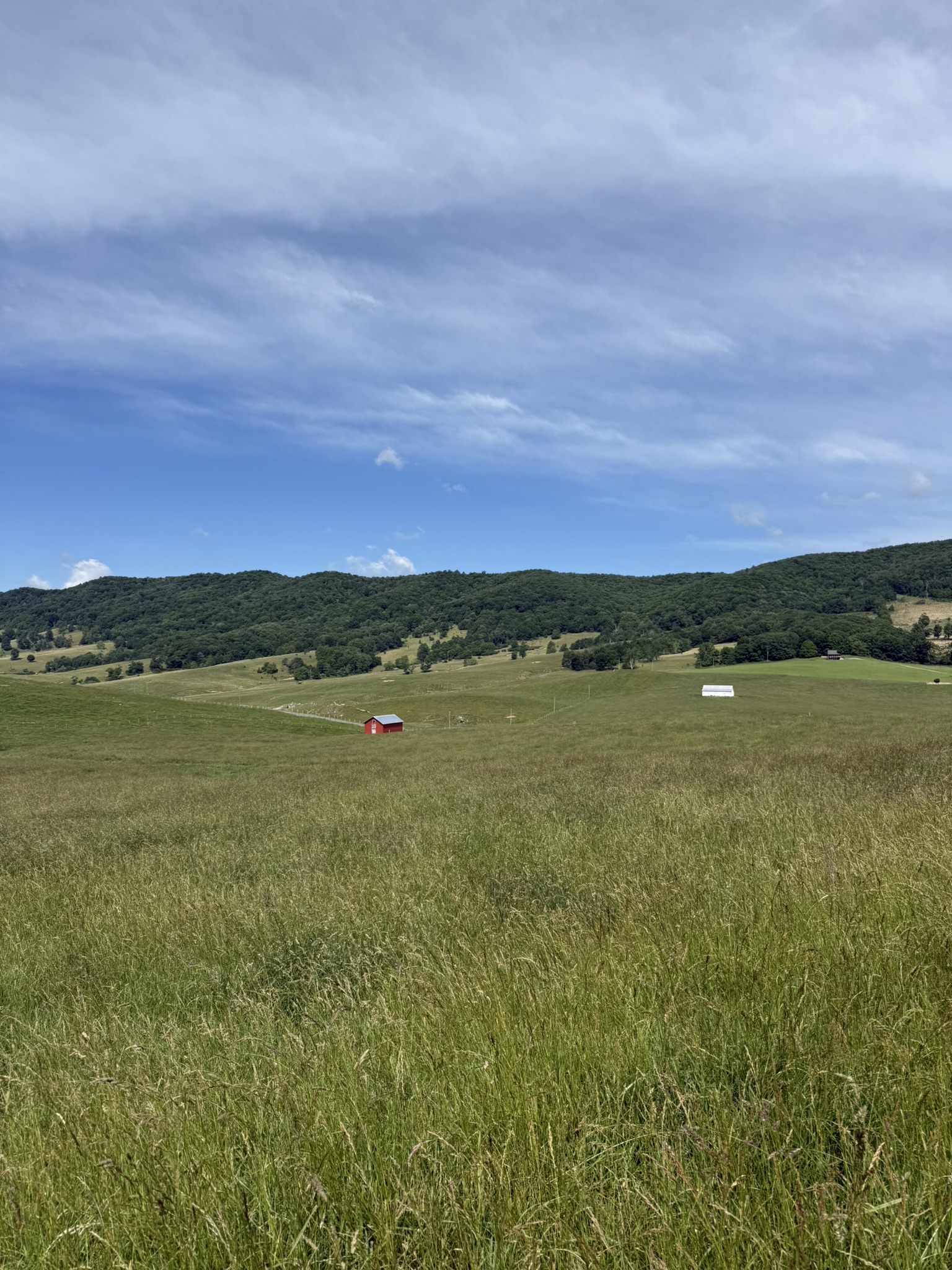
The route from Raleigh is long enough that Beverly works best as an overnight trip, but the drive is one of its advantages. I passed Shenandoah National Park and traveled through the mountain landscapes around George Washington and Monongahela National Forests. The roads became quieter as I moved farther west, with long stretches of forest and mountain views that made the drive feel like part of the weekend.
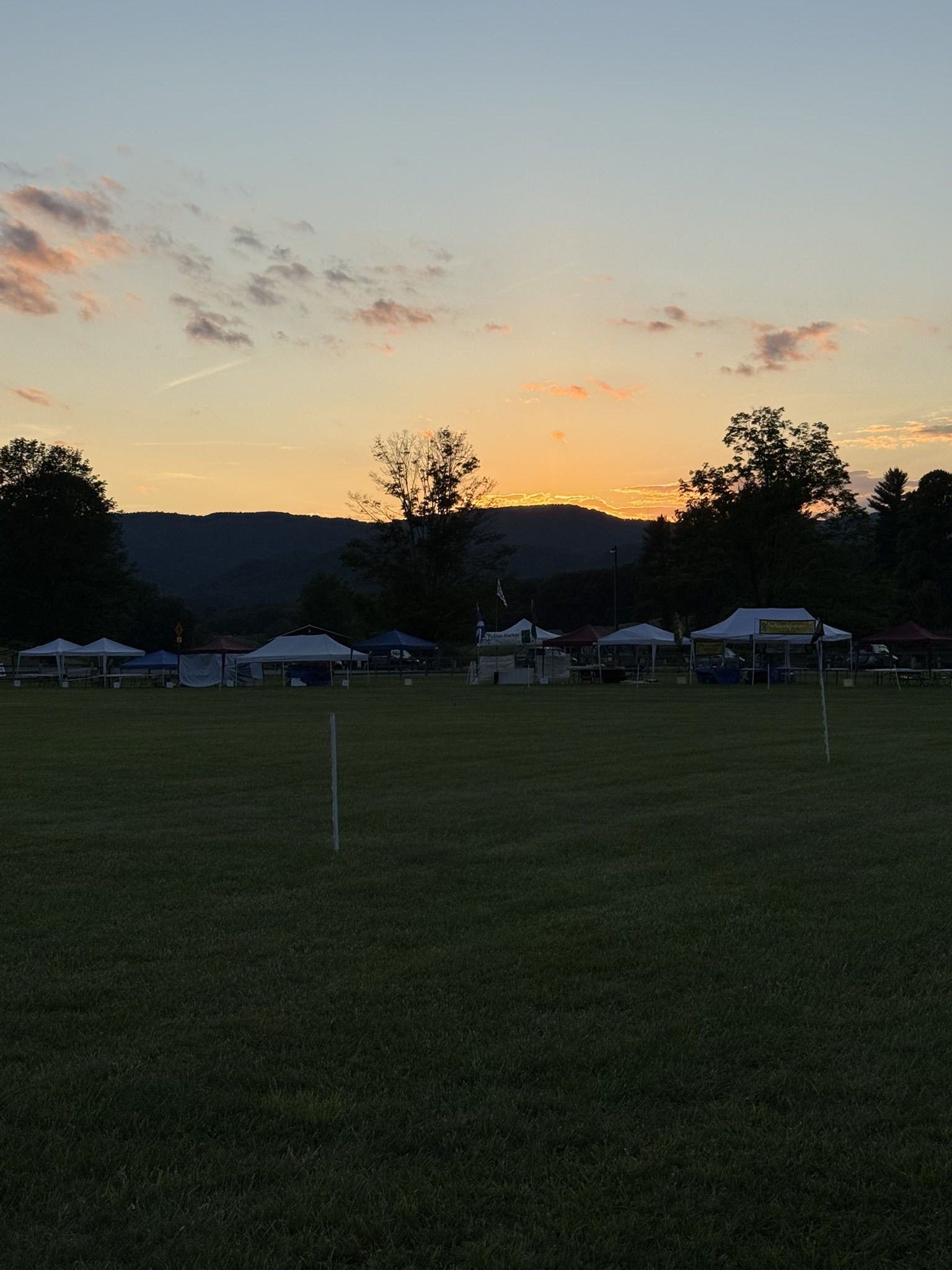
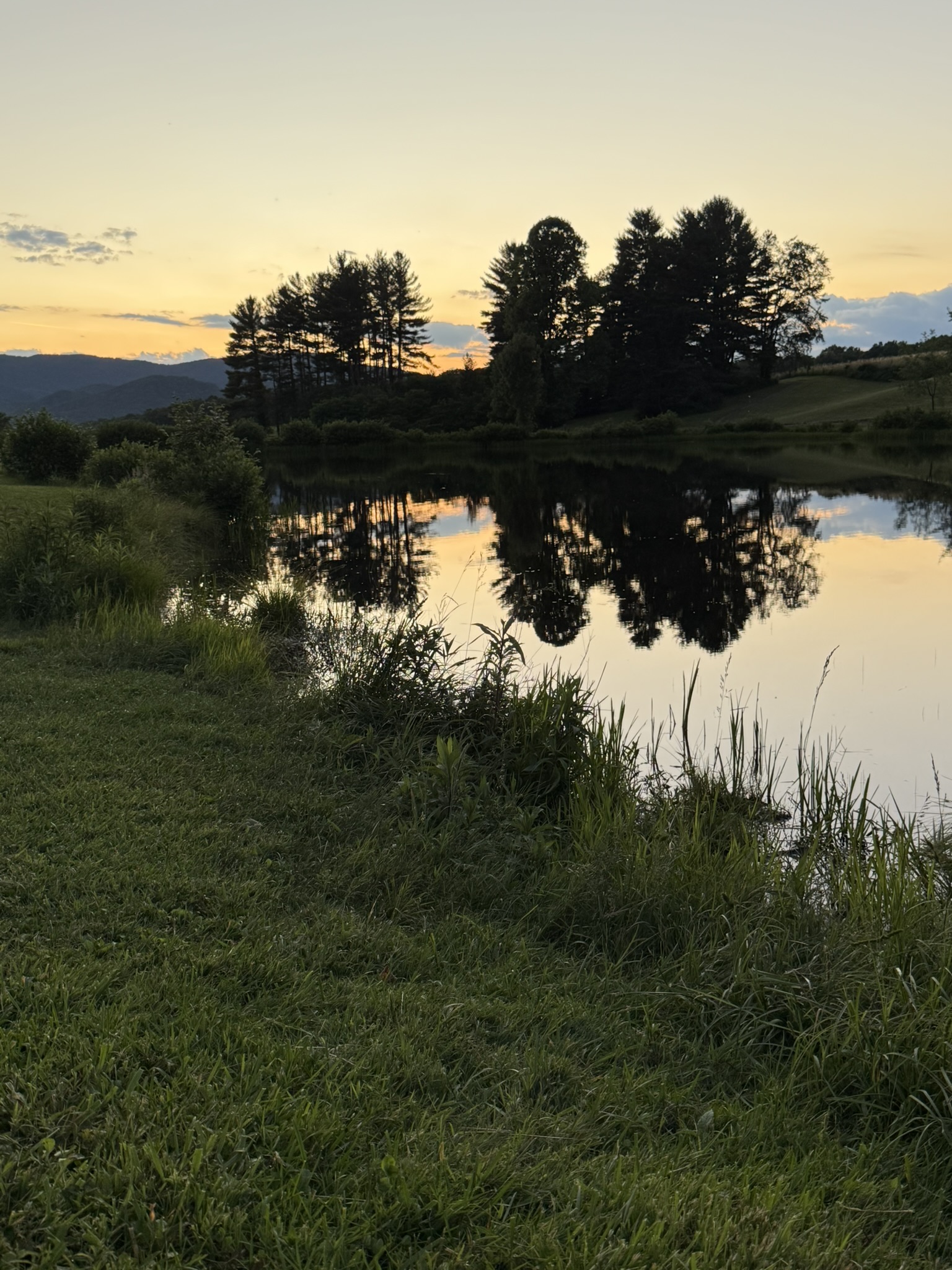
We arrived in time for the festival programming on Friday evening. Live Celtic music played as the sun dropped behind the West Virginia hills, followed by fire dancing after dark. The crowd was small, and there was plenty of room to sit, listen, and enjoy the evening without having to plan where to stand or how early to claim a spot.
Saturday began with breakfast at Scotty’s in Elkins. The restaurant is named for the Scottish terrier rather than the country, but it still felt appropriately themed before a day of Highland Games.
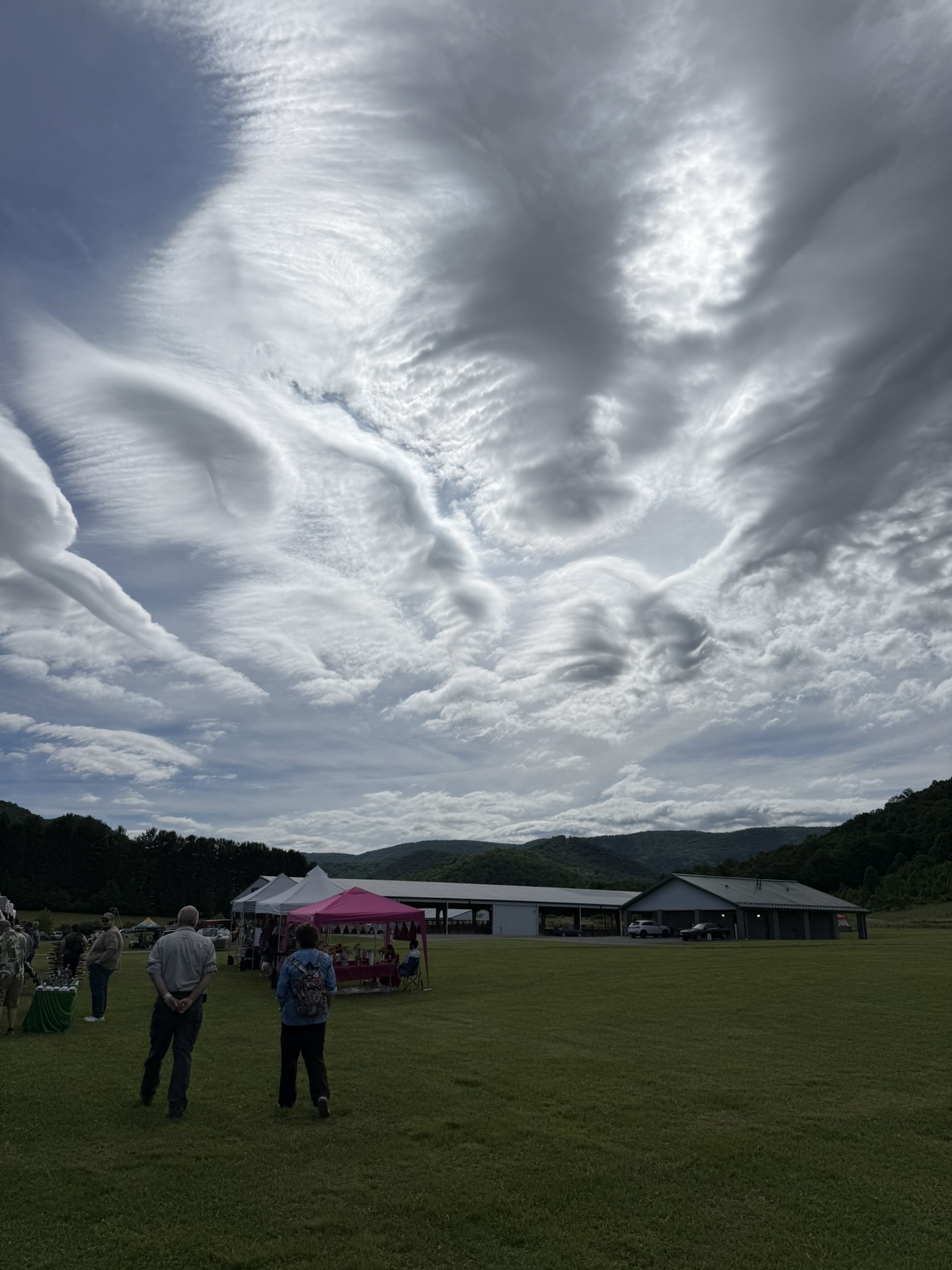
We reached the festival around 9:00 a.m. and stayed until about 2:00 p.m. The organizers said the event normally draws around 2,000 people across the weekend, but only a few hundred seemed to be there at any one time. There were enough people to create energy around the competitions without making the festival feel crowded.
That smaller scale changed the experience in ways I had not expected.
We could stop and have real conversations with the vendors instead of being carried past their booths by a crowd. We spent time petting two Irish wolfhounds and visited the Randolph County Animal Shelter booth, where the kittens provided stiff competition for the athletes as the most popular attraction of the day. We also ran into a few people we knew and had time to catch up.
Even the athletic field felt informal.
While we watched the caber toss, the announcer came over and chatted with the people standing nearby. He explained what was happening, answered questions, and kept up an entertaining stream of commentary throughout the competitions. He introduced the women’s over-40 group with a reminder not to ask exactly how far over 40 they might be, then turned similar jokes on the masters men and himself.
The banter made the events easier to follow, especially for those of us seeing them for the first time.
We watched the caber toss, stone put, and hammer throw. The caber naturally received the most attention. There is something inherently entertaining about watching a person attempt to flip what looks like a telephone pole end over end, but seeing the event in person also made the technique more apparent. Strength alone is not enough. The thrower has to balance the caber, control its momentum, and somehow send it over in a straight line.
The stone put and hammer throw looked no easier.
Music continued throughout the day, but my favorite part of the festival was not a particular band or competition. It was sitting beside my dad over Father’s Day weekend, listening to the music and watching the games together.
He genuinely enjoyed the athletics and the performances. The festival gave us something different to do without demanding that we rush from one scheduled attraction to another. We could sit for a while, walk around when we felt like it, and spend the day together.
Lunch brought another connection to my time in Elkins. El Gran Sabor, a restaurant I used to enjoy during college, had a food truck at the festival. Getting their plantains again, only a few miles from campus, was an unexpected bit of nostalgia.
After leaving the festival, we rested at our Airbnb before going to Big Timber Brewing Company for a beer. Big Timber is one of my dad’s favorite stops when he is in Elkins, so it was an easy choice for the evening.
On Sunday morning, we picked up coffee and pastries from TipTop Coffee before I started the drive home.
I did not take the fastest route back to Raleigh. I stopped in Monterey, Virginia, for a snack at The Curly Maple and pulled over again at an overlook just beyond town. A sign described a Civil War fortification that had once occupied the area, while the view opened across farmland and rolling mountains.
It was not a major sightseeing stop. It was simply a good place to get out of the car, take a few pictures, and enjoy the countryside before continuing home.
A Rainy Afternoon at Grandfather Mountain
A few weeks later, I headed back toward the mountains, this time to join Daniel’s parents at their condo overlooking Grandfather Mountain.
Jerry and Sarah had talked about attending the Grandfather Mountain Highland Games for years. The event takes place close to the condo, but it had remained one of those nearby attractions they kept meaning to visit.
This year, we finally did.
Daniel had to work during the festival, as he had during the West Virginia weekend. He was disappointed to miss both events, but he came to the condo and spent the rest of the weekend with us.
The weather changed our plans almost immediately.
Storms moved through the High Country for much of the weekend. We could hear thunder in the mornings, and mist hung around Grandfather Mountain outside the condo windows. Hiking did not seem particularly appealing, so we spent more time inside than we had expected.
That was not necessarily a bad thing.
We ate dinner both evenings while looking out toward the mountain, watched the Wimbledon women’s final and parts of the FIFA Club World Cup, and had the kind of unstructured family time that often disappears when a weekend becomes too focused on sightseeing.
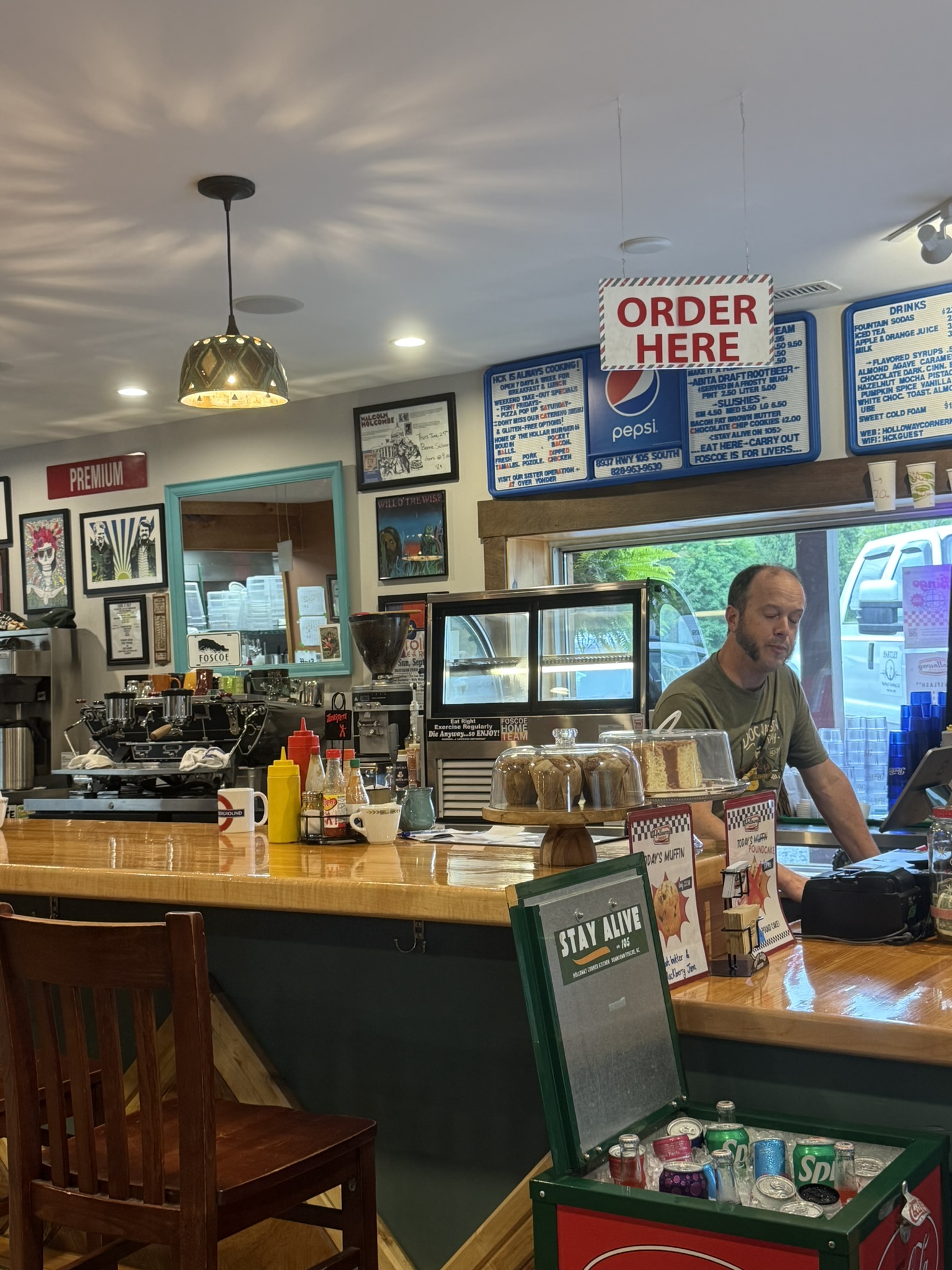
On Saturday morning, we picked up breakfast from Holloway’s Diner in Foscoe and brought it back to the condo. Later, Jerry, Sarah, and I drove to the designated parking area and boarded a shuttle to the games.
The shuttle ride was the first indication that this would be a much larger event than the festival in Beverly.
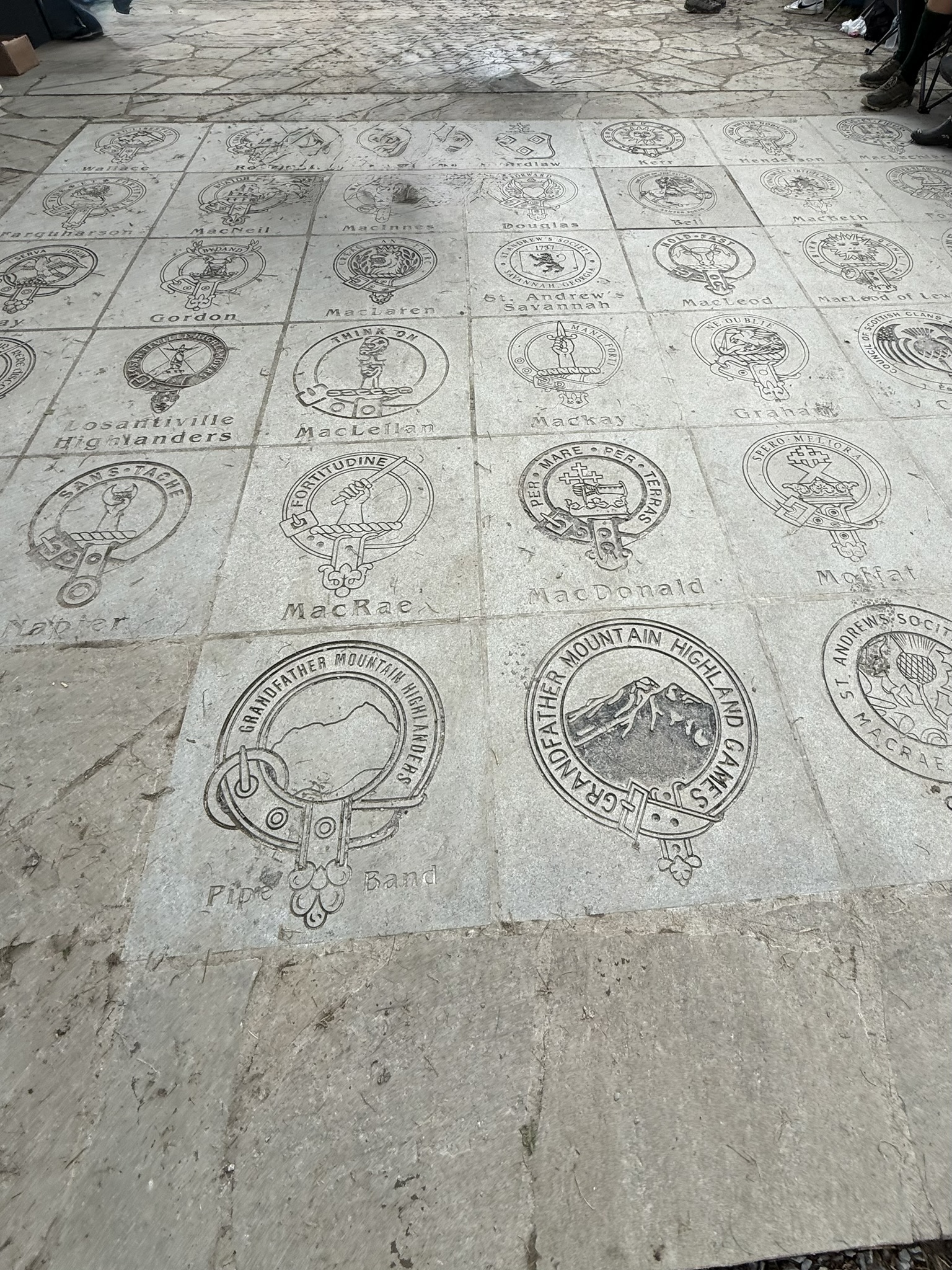
At Grandfather Mountain, clan tents stretched across the grounds, crowds filled the paths and hillsides, and something seemed to be happening in every direction. Where West Virginia had felt like a community festival, Grandfather Mountain felt like a destination.
That scale is part of the appeal, but it also requires more planning. This is not an event where I would recommend arriving casually for a couple of hours and expecting to see everything. On a good-weather day, it would be easy to spend most of the day watching competitions, exploring the clan tents, listening to music, and browsing the vendors.
Unfortunately, we did not get a good-weather day.
We stayed for about two hours before the rain became too unpleasant. During that time, we watched the women’s caber toss, saw part of a Highland dance competition, and caught what appeared to be the end of the sheaf toss.
We also did some excellent people-watching. Grandfather Mountain attracts visitors who take the occasion seriously, and the crowd included plenty of kilts, tartans, and outfits that suggested years of family participation rather than a spontaneous Saturday activity.
Because of the rain, we missed much of what makes the event distinctive. We barely explored the clan tents and did not spend much time with the vendors. The crowds were more difficult to navigate once everyone was carrying umbrellas or trying to stand beneath the same limited patches of shelter.
Even so, the festival remained welcoming.
Jerry talked with several people who explained the competitions and told us what else was happening around the grounds. As in West Virginia, no one treated our lack of Scottish ancestry as a reason we should not be there. People seemed happy that we were curious enough to ask.
We also watched a steady stream of people carrying enormous turkey legs and spent the shuttle ride back wondering why we had not bought one.
The rain shortened the festival visit, but it did not ruin the weekend. On Sunday, we stopped at Mountain Dog Coffee before heading back to Raleigh, leaving the mist and storms behind as we came down from the mountains.
Two Ways to Experience the Highland Games
The festivals were similar in all the obvious ways. Both had bagpipes, Highland athletics, music, vendors, and people celebrating Scottish heritage against a mountain backdrop.
The main difference was scale.
The West Virginia festival gave us room to linger. We could talk with vendors, stand near the athletic field, joke with the announcer, and move through the grounds without thinking much about crowds or schedules. It felt local and personal.
Grandfather Mountain offered far more to see. The number of clan tents alone made it clear how much larger and more established the event is. The competitions, dancing, crowds, and mountain setting gave it the atmosphere of a major annual gathering.
Neither approach is automatically better.
For someone attending a Highland Games for the first time, especially without a strong connection to Scottish heritage, Beverly may be the easier introduction. The smaller crowd makes it simple to ask questions and understand what is happening. It also combines naturally with a weekend in Elkins and a scenic Appalachian drive.
Grandfather Mountain is the better choice for someone who wants the full experience. It offers more activity, more people, and more visible clan participation. It also requires more preparation. Arrive early, allow time for the shuttle, expect crowds, and plan to stay for most of the day. Bring rain gear even if the forecast seems acceptable. Mountain weather can change quickly, and an umbrella is not especially useful when hundreds of other people have the same idea.
The event also makes the most sense as part of a High Country weekend rather than a quick visit from Raleigh. Boone, Banner Elk, Foscoe, and the surrounding areas offer enough to fill the rest of the trip, although summer weekends can be busy even without the games.
Do You Need to Be Scottish?
This was the question sitting quietly behind both trips.
The answer is no.
At neither festival did we feel as though we had entered a private reunion to which we had not been invited. The events were built around Scottish heritage, but people were eager to share that heritage rather than protect it from outsiders.
They explained the athletics. They talked about the clans. They answered basic questions without making us feel foolish for asking them.
That openness was probably what I enjoyed most.
I did not come away with a new understanding of my own ancestry. These were not our family traditions, and I do not want to pretend they became ours after a few hours of bagpipes and caber tossing.
I did, however, leave wishing there were more public celebrations like this for our Czech, Russian, English, and Welsh backgrounds. The Highland Games made heritage feel active rather than historical. It was something people were doing together, not simply a collection of names and dates recorded in a family tree.
Would We Go Again?
We may not return to either event every year.
Without family ties to a clan or a personal tradition connected to the games, neither festival has the pull it might have for someone who has attended since childhood. There are also many other events and places we want to explore.
But both were worth attending once, and I would recommend either to someone looking for a different kind of mountain weekend.
Choose West Virginia for the smaller crowd, easier conversations, and the opportunity to build a relaxed weekend around Elkins and the surrounding countryside.
Choose Grandfather Mountain for the spectacle, the clan tents, and the sense of attending one of the region’s major summer traditions.
For us, the games provided the framework for something simpler: two weekends with our parents, one over Father’s Day and one in a rain-covered condo overlooking Grandfather Mountain.
Daniel missed the competitions because he had to work, but we showed him the photos and videos and gave him a full report afterward. He still joined us for dinners at the condo, tennis and soccer on television, and time together while the storms moved across the mountain.
We did not leave either festival Scottish.
We did leave a little envious.
Filed under
More from Domestic
Discovering Hidden Gems in West Virginia: A Journey Home
West Virginia always feels different when it is personal. This trip was about sharing old favorite places, from mountain drives and coffee in Thomas to Blackwater Falls and Seneca Rocks.
Apples, Apple Cannons & Meeting the Parents: A Weekend in Hendersonville.
Apple orchards, mountain views, and the weekend Daniel started feeling like part of the family.